Serenty Guide
How to Meditate: A Simple Beginner Guide
Meditation is simpler than most people make it. You notice one thing, your mind wanders, and you come back. That return is the practice.
Beginner guides
Start here if you want plain language, low-friction practice, and no vague meditation advice.Short answer
To meditate, sit or stand comfortably, choose one anchor like the breath or body, and return attention each time the mind moves away.
Who this helps
- first-time meditation
- people who want a plain answer
- building a basic daily practice
Best when you want a clear starting point, a simple routine, or a plain answer without meditation jargon.
Sample session
How to do it
- 01
Get comfortable enough
Sit in a chair or on a cushion with a posture you can hold without strain.
- 02
Pick one anchor
Follow the breath, body sensations, or sounds in the room.
- 03
Notice when the mind leaves
Distraction will happen. The point is to recognize it.
- 04
Return again
Gently come back to the same anchor for a few minutes.
Guided vs silent practice
Guided
Better when you want structure, cues, and fewer decisions about what to do next.
Silent
Useful later when the basic rhythm feels familiar and you want more open space.
Most beginners learn faster with guidance first, then build toward shorter silent practice later.
Helpful notes
- You do not need to clear your mind.
- Start short so the habit can survive real life.
- Guided sessions are useful if you want more structure.
FAQ
What is the easiest way to meditate?
Sit comfortably, notice the breath, and come back each time your attention drifts.
How long should beginners meditate?
Start with three to five minutes. Extend later if it still feels useful.
Do I need to sit cross-legged?
No. A chair works fine as long as you are reasonably comfortable and alert.
Keep going
Next best move
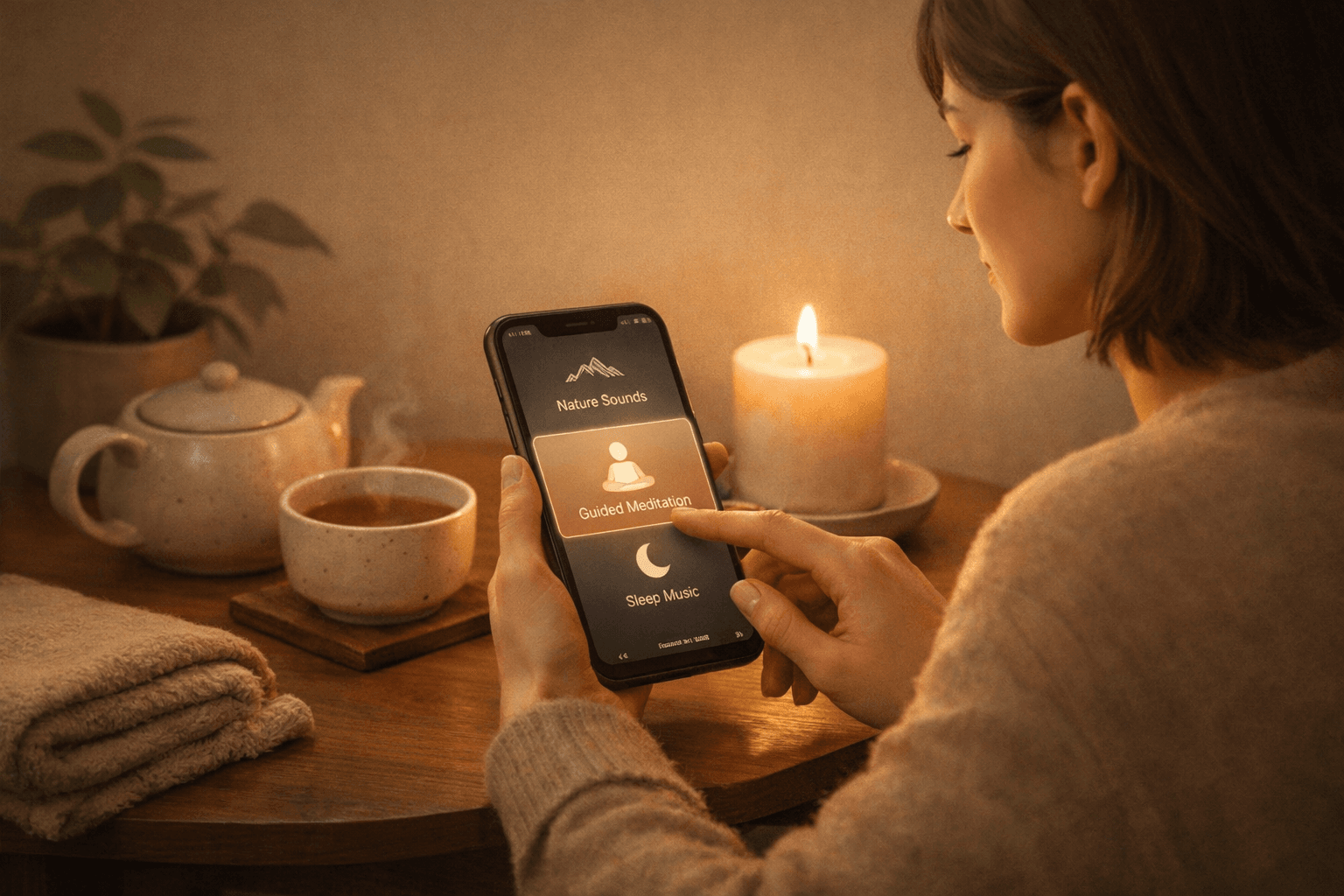
Start a short guided practice inside Serenty.
Use the reset for right now, then keep the sessions that actually work for you.